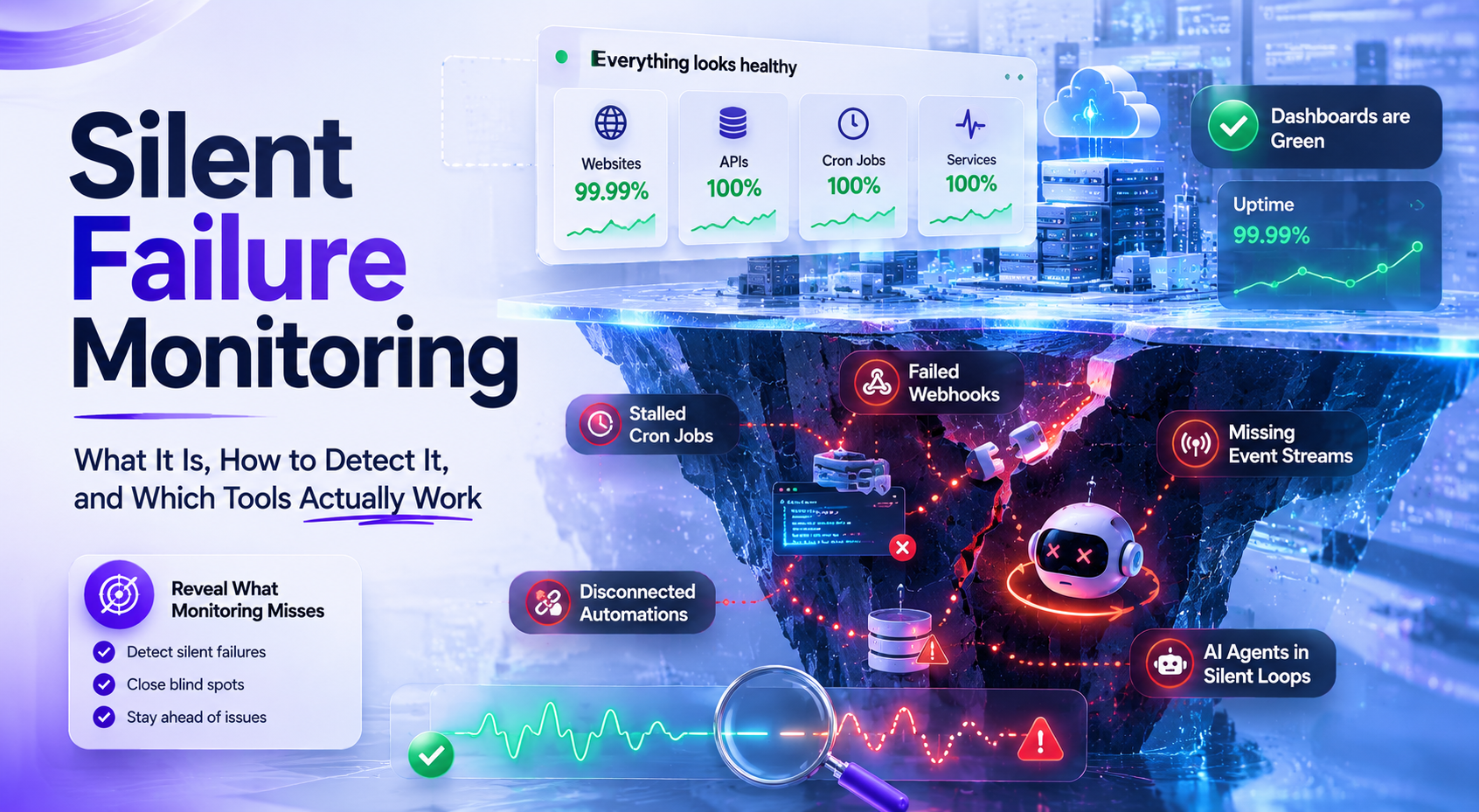
Silent failures don't throw exceptions. They don't create incidents. They just quietly cost you money until someone notices. This is the complete guide to understanding, detecting, and monitoring every type of silent failure in production.
PagerDuty and Incident.io both published comparison posts about each other in 2026. Neither mentioned what small teams and founders actually care about: catching the failures that never create an incident in the first place.
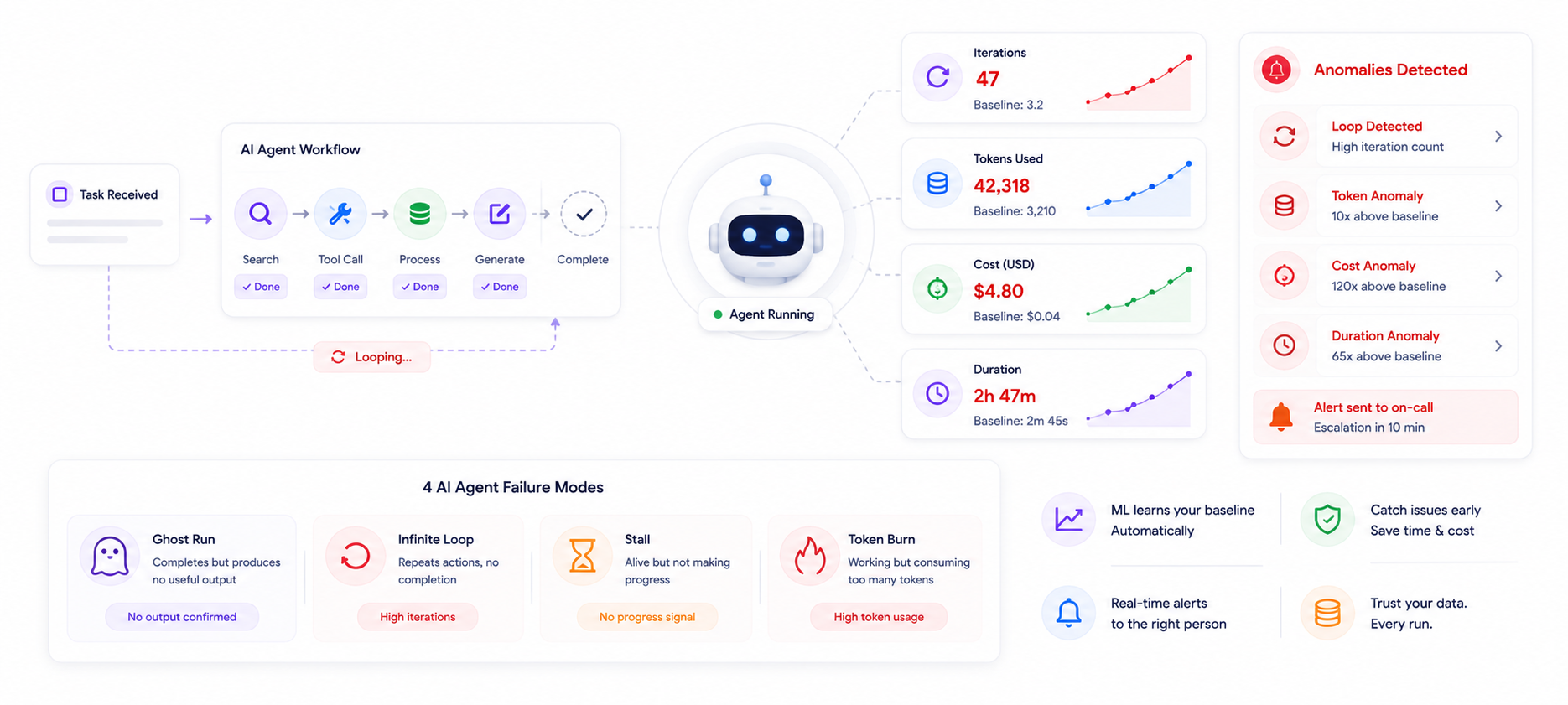
There are two questions you can ask about an AI agent running in production. Is it running? And is it working? Most monitoring stacks answer the first well. None of them answer the second.
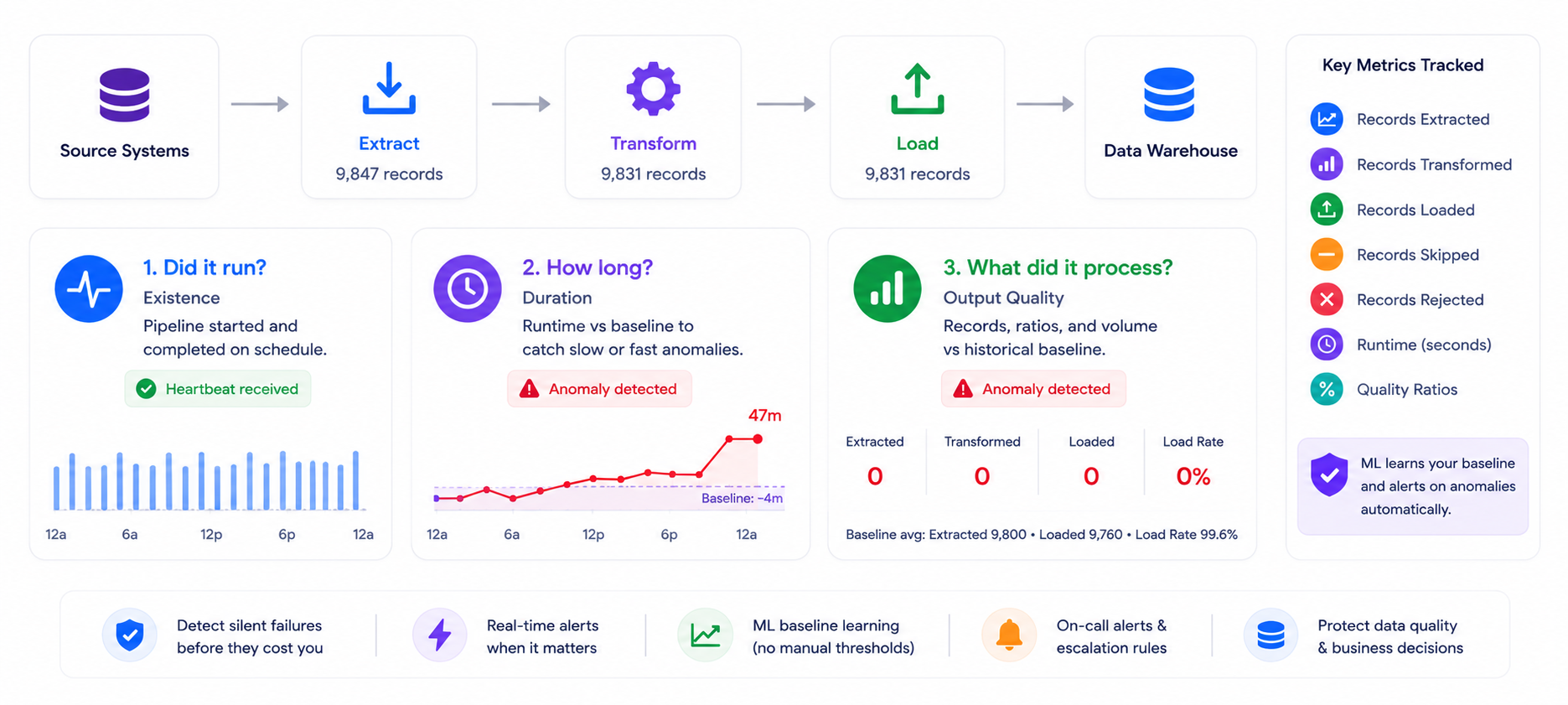
ETL pipelines fail silently more than any other part of a data stack. The job runs. The exit code is 0. Zero records were processed. Your data warehouse is stale and nobody knows. Here's how to catch it.
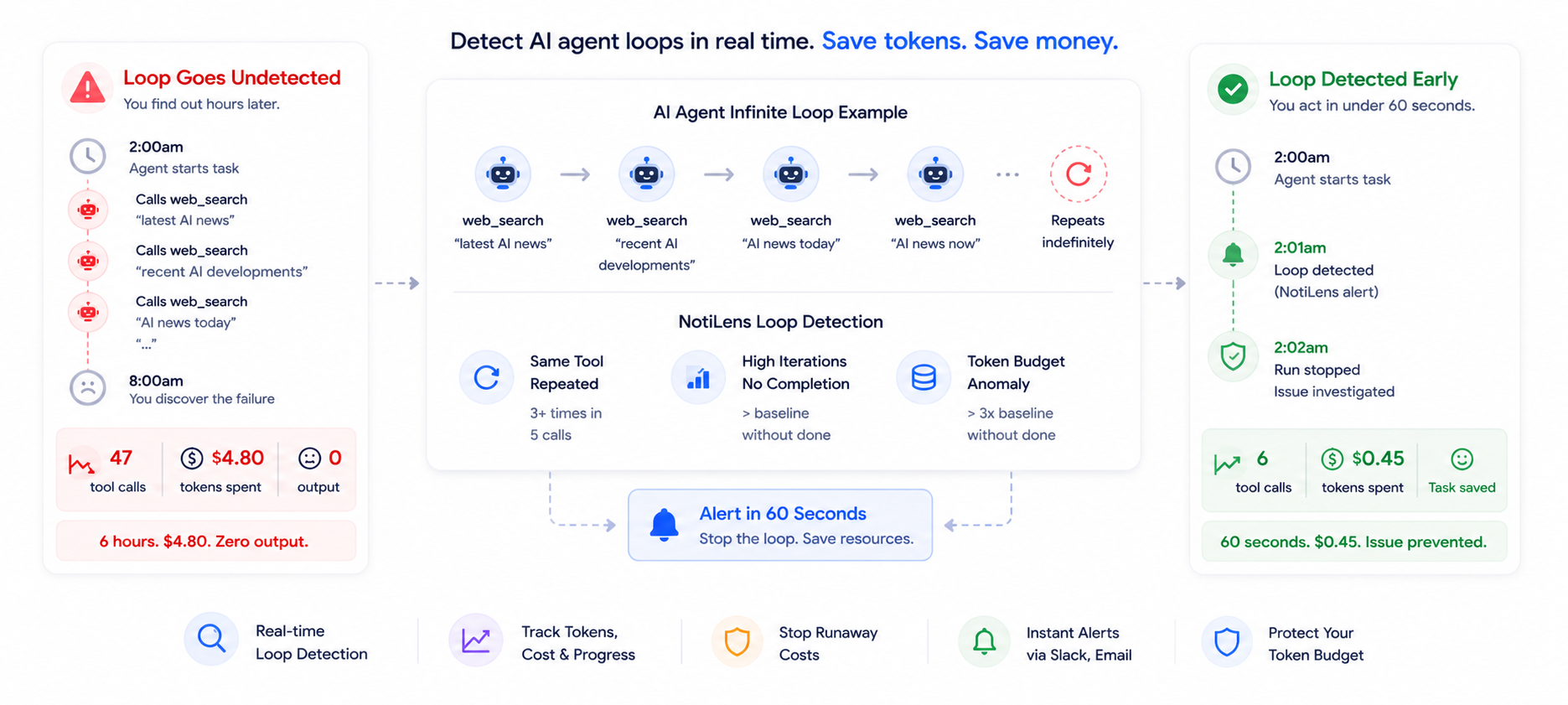
AI agent infinite loops don't throw exceptions. They look like normal activity — tool calls firing, tokens consuming, the process alive — until the budget is gone and the output is empty. Here's how to detect and stop them in real time.
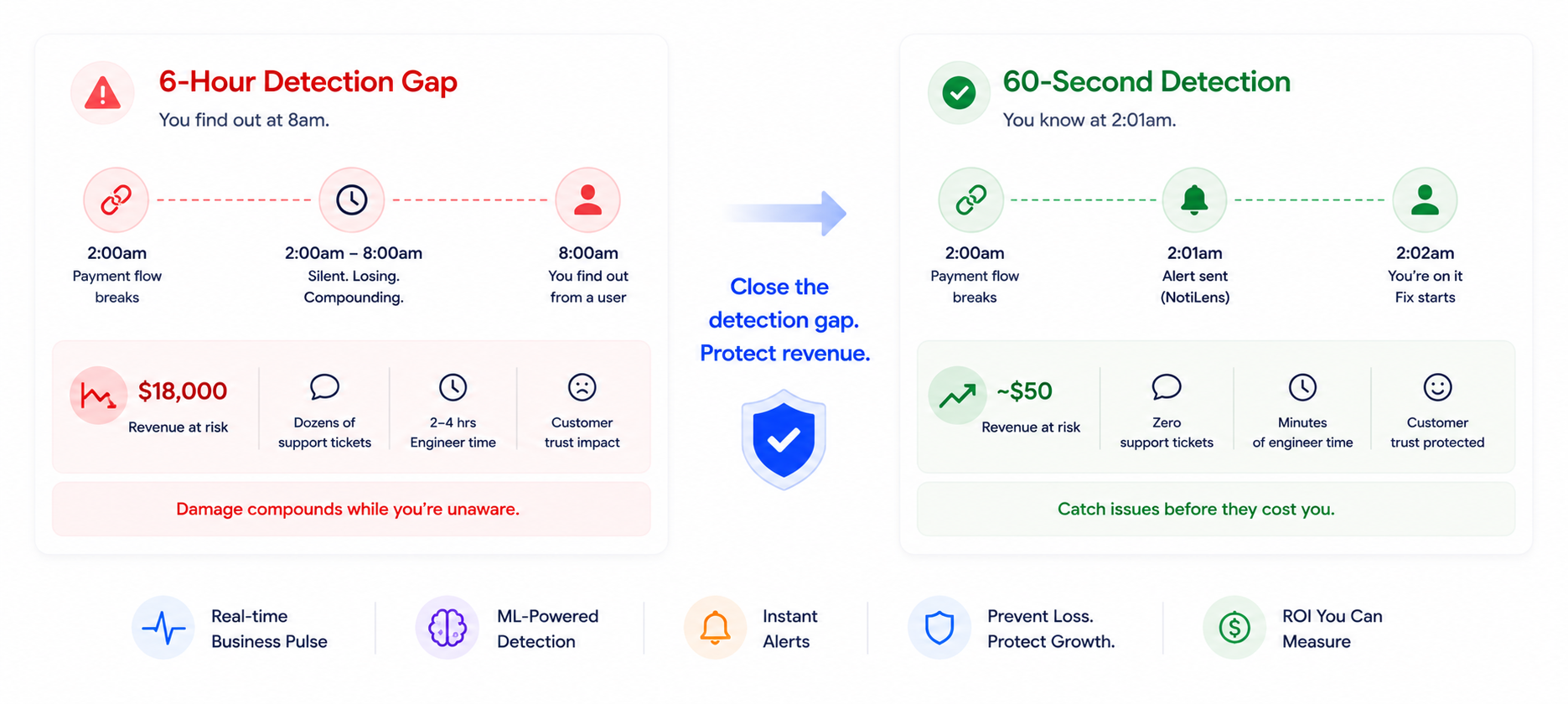
The detection gap is where silent failures compound — and most monitoring stacks have no answer for it. Here's the calculation nobody runs, and why detection time matters more than fix time.
You're a founder. You don't have an SRE on call at 2am. You have a laptop, a Slack, and the vague anxiety that something is quietly breaking right now. Here's the monitoring stack I wish I'd had from day one.
Pushover is a $5 push notification pipe. It's excellent for solo developers. The moment you need silence detection, on-call scheduling, business event monitoring, or team routing — it hits a wall. Here are 7 alternatives that go further.
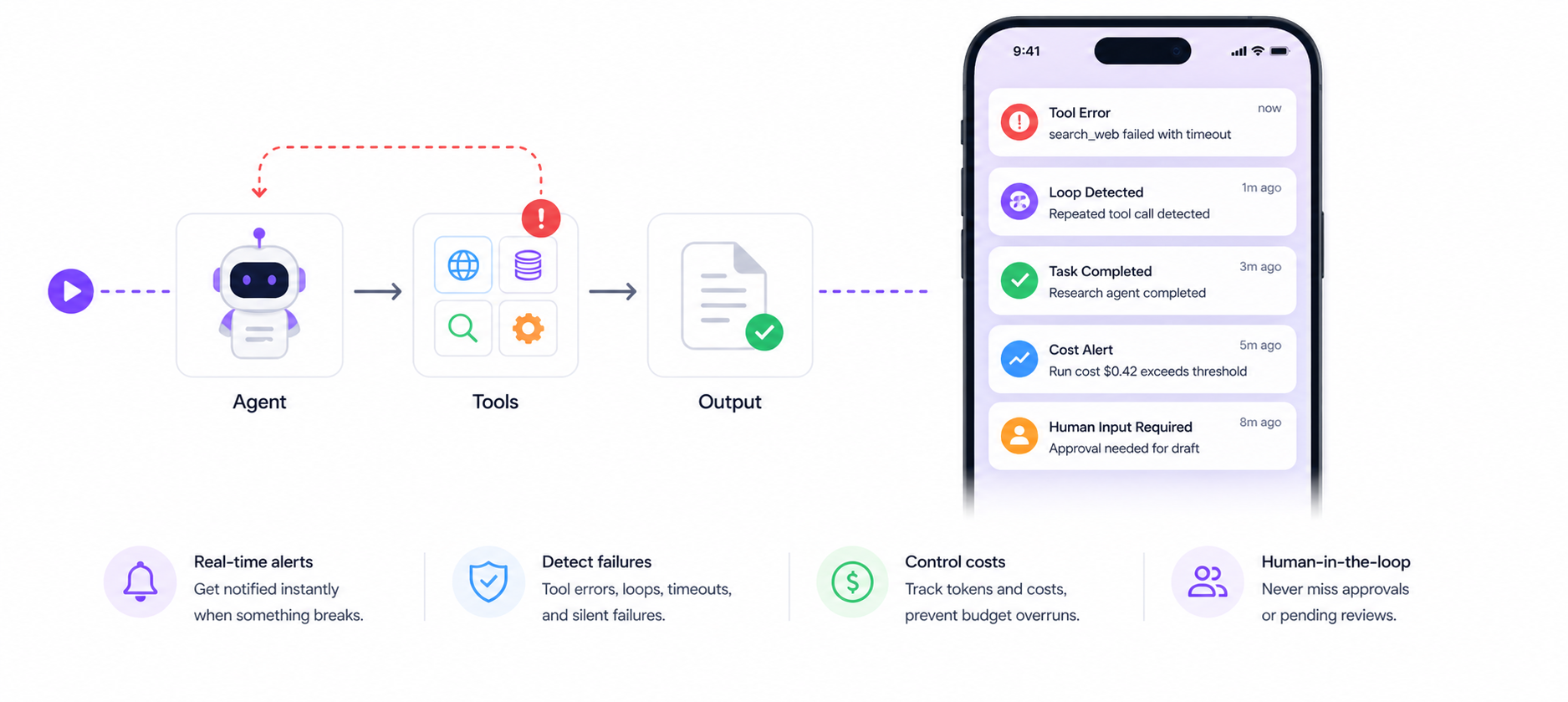
AI agents fail differently from regular software. They don't crash — they drift, loop, stall, and consume resources while producing nothing. This guide covers the two failure modes unique to agentic AI and how to monitor for both.
Most SaaS founders look at dashboards. The best ones get alerted. Here are the 10 metrics that matter most — and exactly what to alert on so you find out about problems before your users do.
Alert fatigue is when your monitoring alerts so often that you stop trusting them — and start ignoring them. The solution isn't fewer monitors. It's smarter alerting. Here's what that actually means in practice.
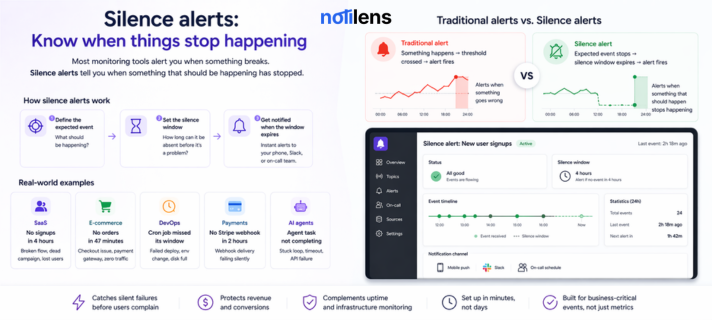
Your uptime monitor is green. Your error rate is clean. Your server is responding. And your business has been quietly bleeding for six hours. This is the silent failure problem — and it's more common than anyone admits.
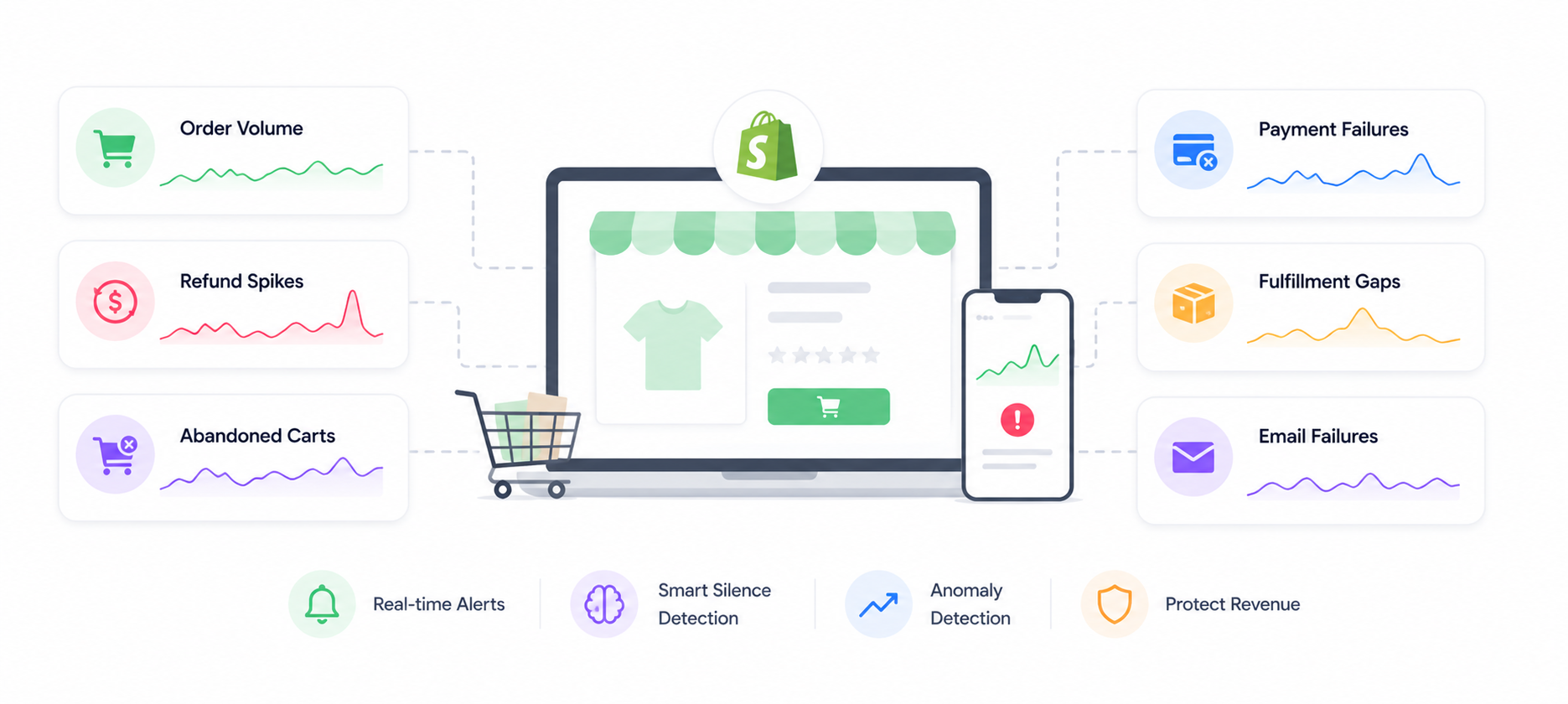
Your Shopify store can be losing revenue right now and your dashboard will show green. This guide covers what to monitor, what to alert on, and how to catch the silent failures that cost e-commerce stores the most money.
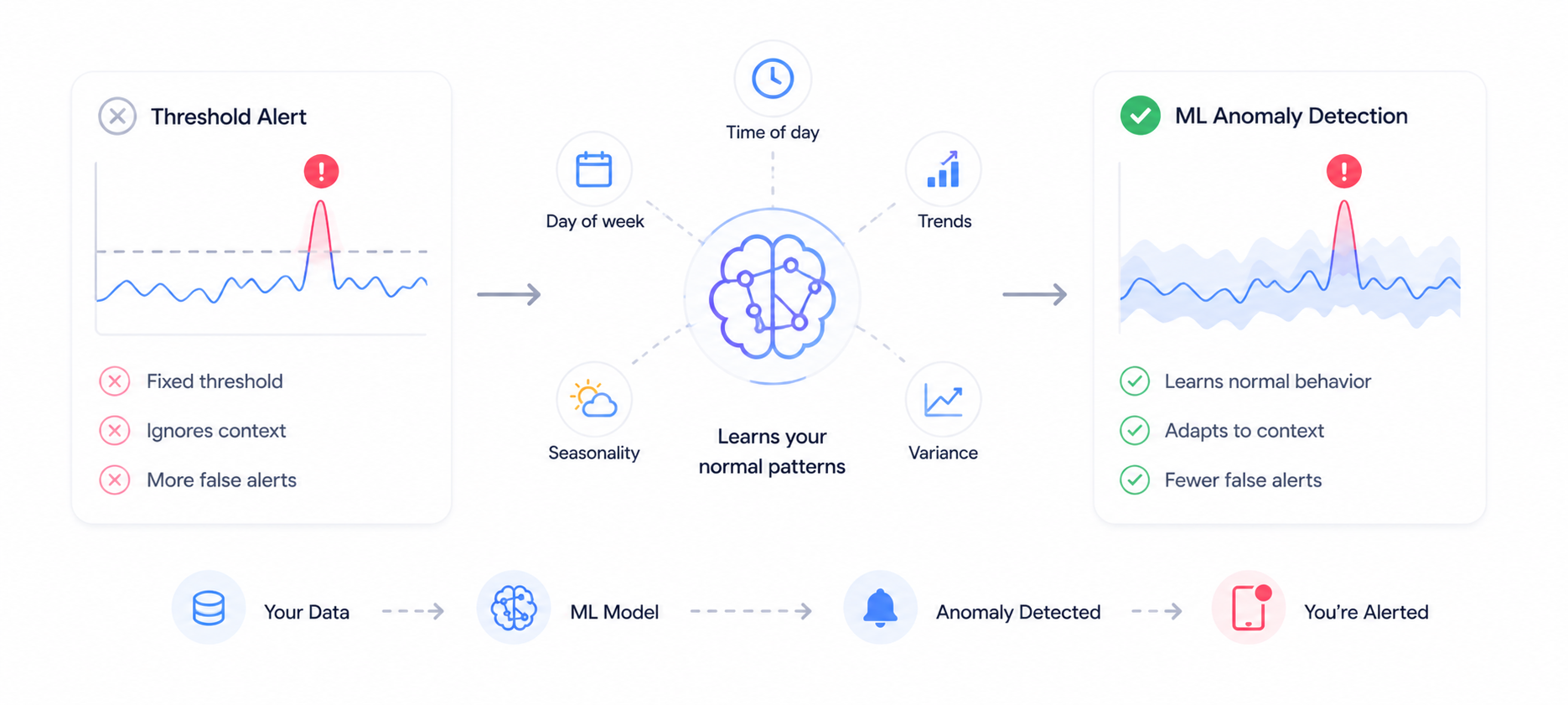
ML anomaly detection watches your business metrics and alerts you when something is genuinely abnormal — without you having to define what 'normal' looks like. Here's how it works, why it matters, and how it's different from threshold alerts.
LangChain agents fail silently in production — tool errors, infinite loops, stalled chains, cost spikes. Here's how to add real-time monitoring and alerts to any LangChain agent in under 10 minutes.
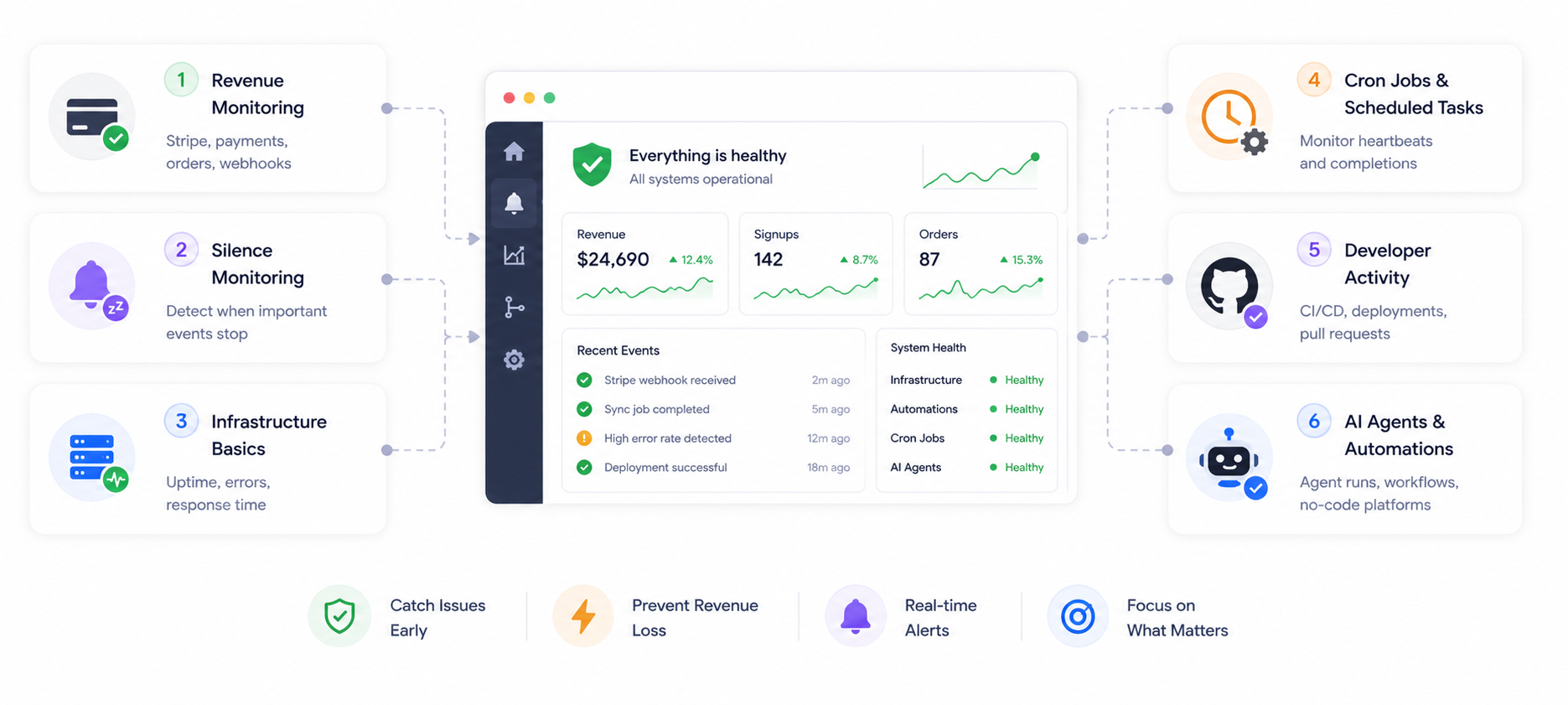
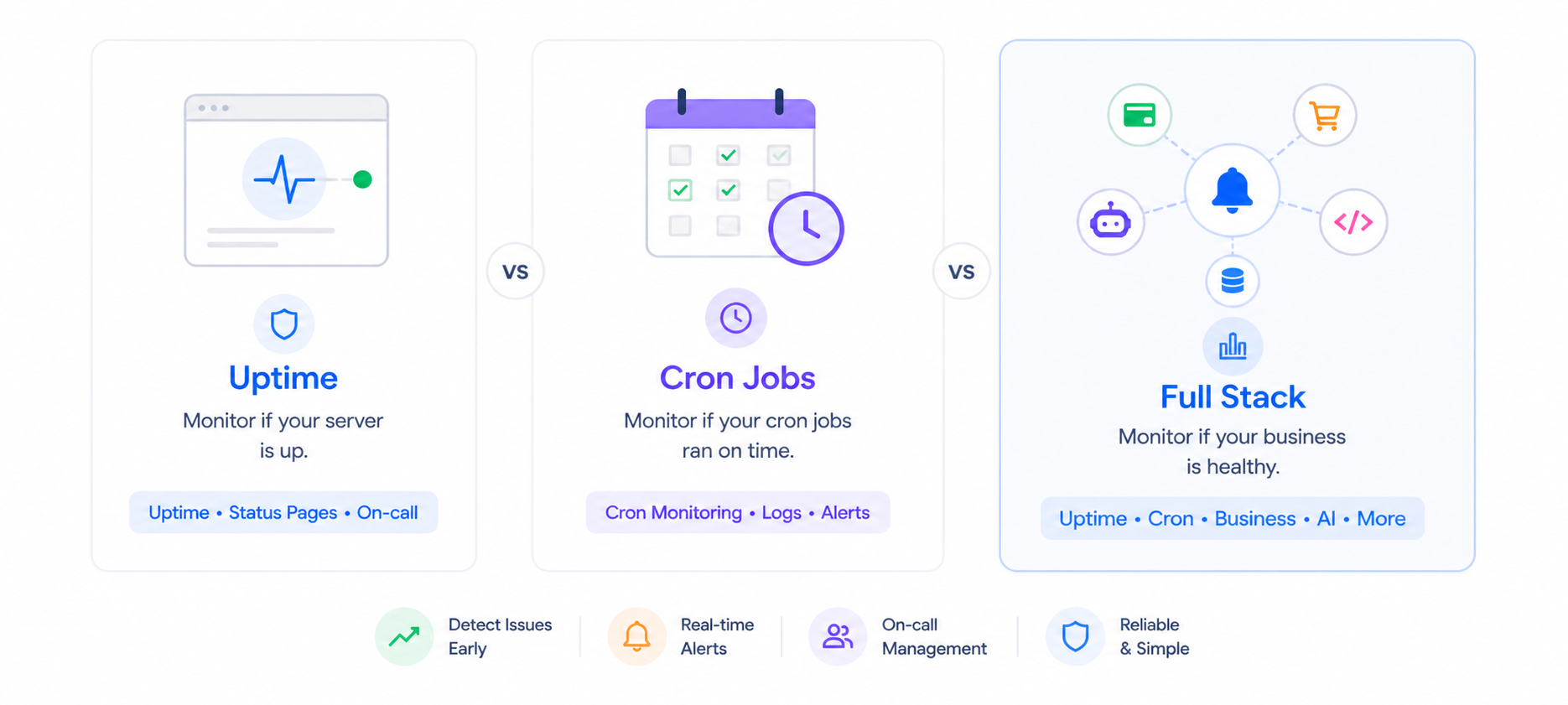
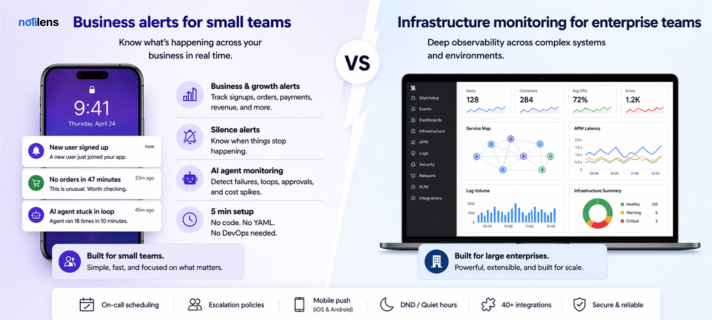
Better Uptime monitors if your server is up. Cronitor monitors if your cron jobs ran. NotiLens monitors whether your business is healthy — payments, orders, agents, jobs, and servers, all in one place with ML-powered silence detection.
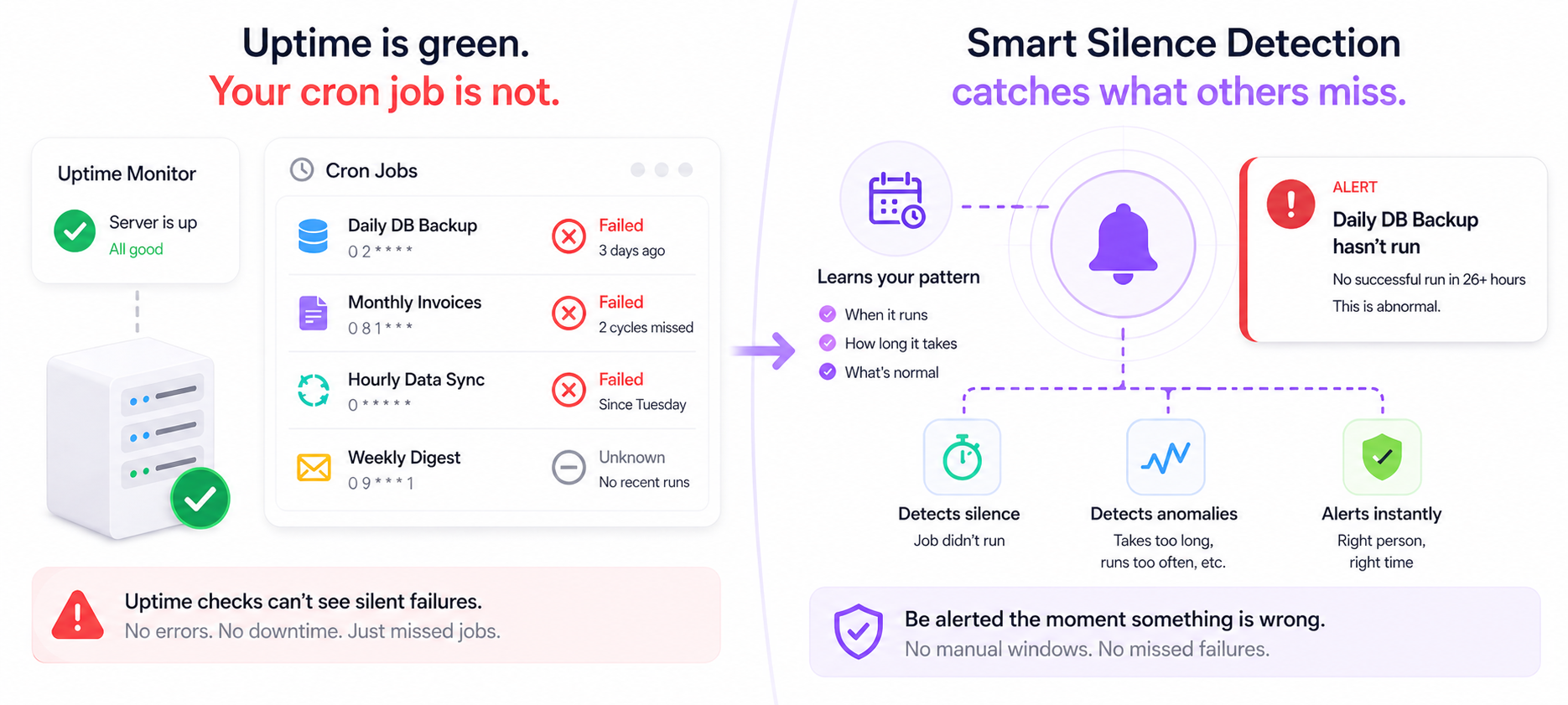
Your server is up. Your uptime monitor is green. But your cron job silently stopped running 3 days ago — and nobody told you. Here's why uptime checks miss this entirely, and what actually works.
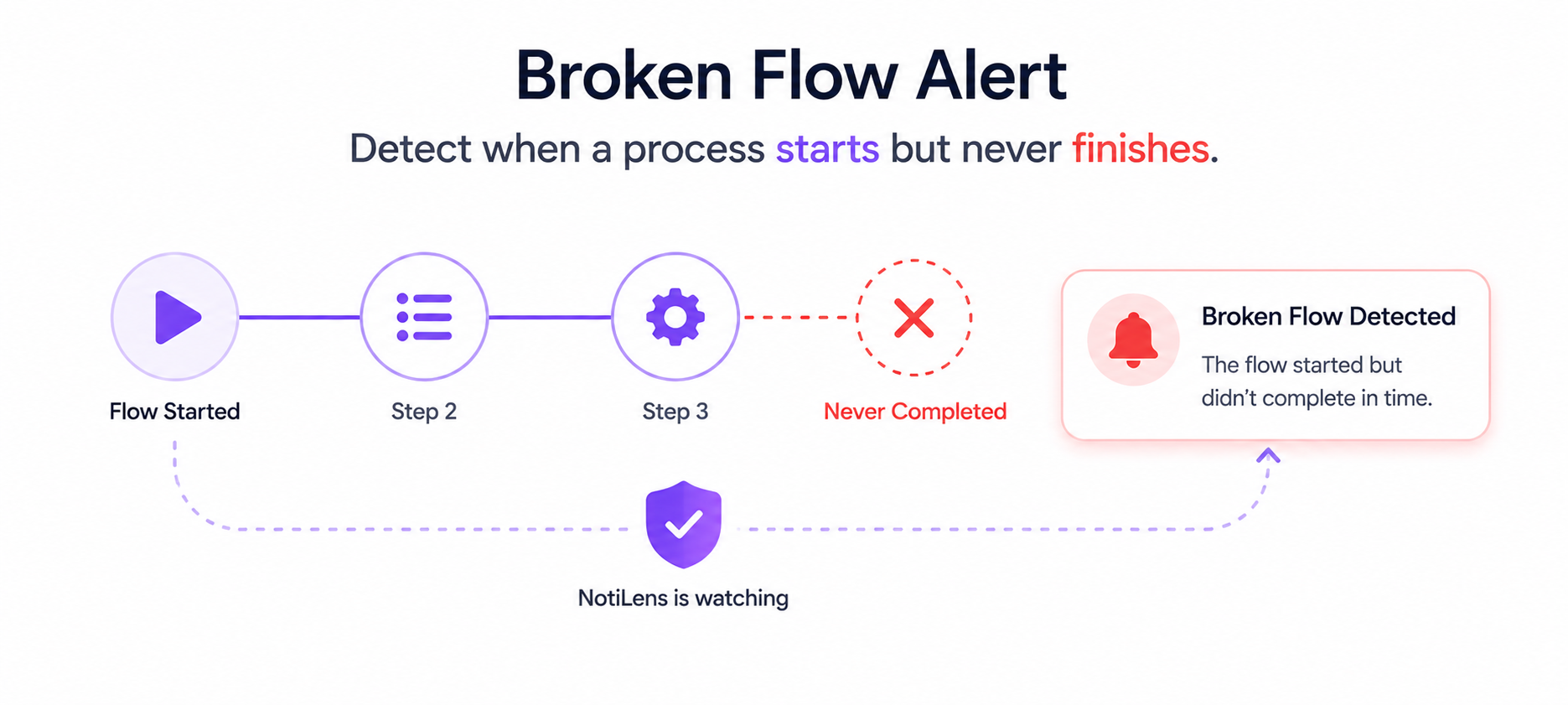
A broken flow alert fires when a multi-step process starts but never finishes. Payment initiated, never completed. Signup started, never confirmed. Job started, never done. Here's how it works and why it matters.
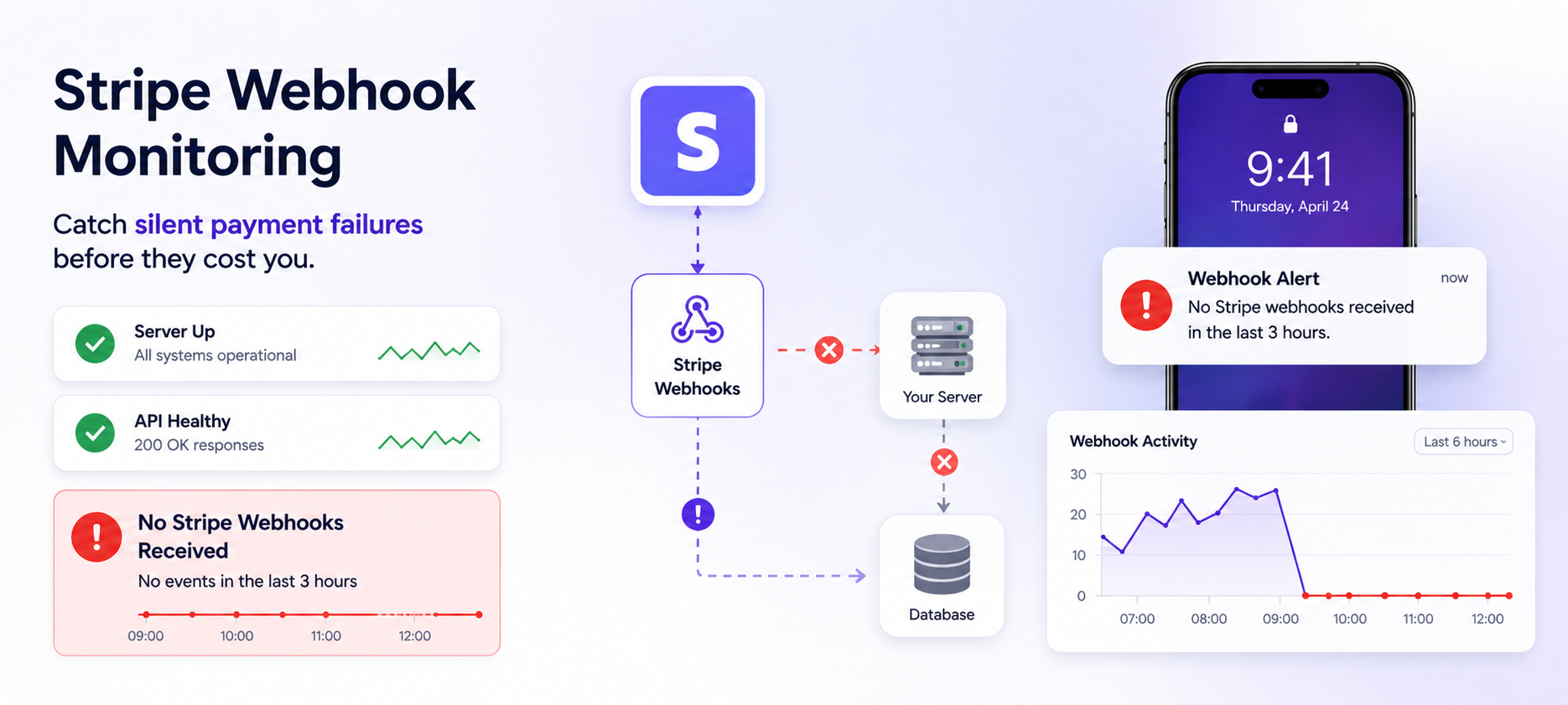
Stripe webhooks fail silently. Your server looks fine, your API is up, but payments are being processed with no record in your database. Here's how to catch it before it costs you.
Datadog is a powerful infrastructure observability platform — but it costs $100+/month before you've monitored a single Stripe payment. Here's how NotiLens compares for founders and small teams.
Most monitoring tools alert you when something breaks. Silence alerts tell you when something that should be happening has stopped — and that's often the more expensive failure.