PagerDuty and Incident.io both published comparison posts about each other in 2026. Neither mentioned what small teams and founders actually care about: catching the failures that never create an incident in the first place.
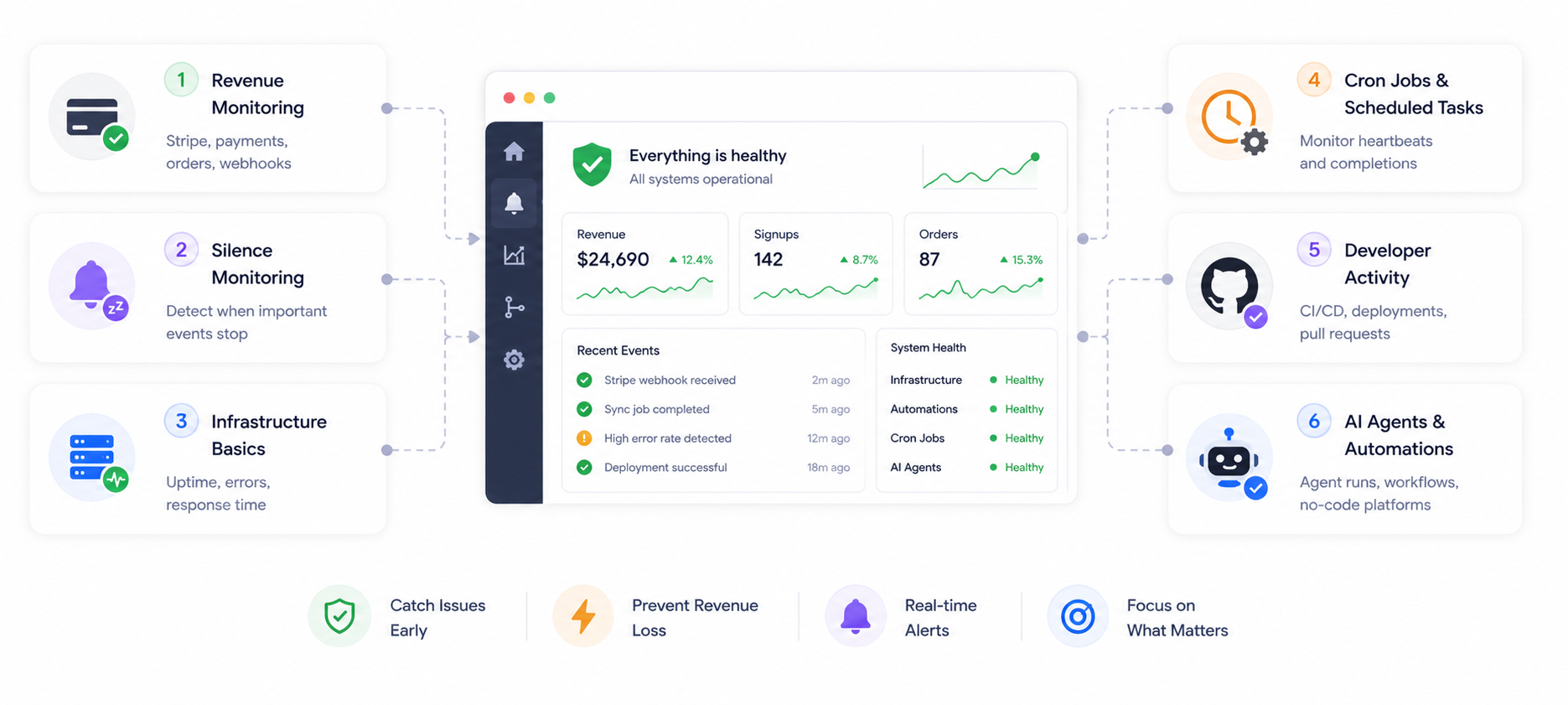
Most comparisons get this wrong from the first sentence. PagerDuty and Incident.io are incident response tools. NotiLens is a business pulse monitor. That distinction matters more than any feature table.
You're a founder. You don't have an SRE on call at 2am. You have a laptop, a Slack, and the vague anxiety that something is quietly breaking right now. Here's the monitoring stack I wish I'd had from day one.
Most SaaS founders look at dashboards. The best ones get alerted. Here are the 10 metrics that matter most — and exactly what to alert on so you find out about problems before your users do.
Most on-call tools are built for 50-person SRE teams. This guide covers everything a small team of 2–10 needs to set up proper on-call — rotation, escalation policies, DND, holiday overrides, and timezone-aware scheduling — without the enterprise overhead.
PagerDuty starts at $21/user/month and was designed for 50-person SRE teams. If you're a founder or small team who just needs reliable alerting and on-call without the enterprise overhead — here are 7 better options.
Your uptime monitor is green. Your error rate is clean. Your server is responding. And your business has been quietly bleeding for six hours. This is the silent failure problem — and it's more common than anyone admits.
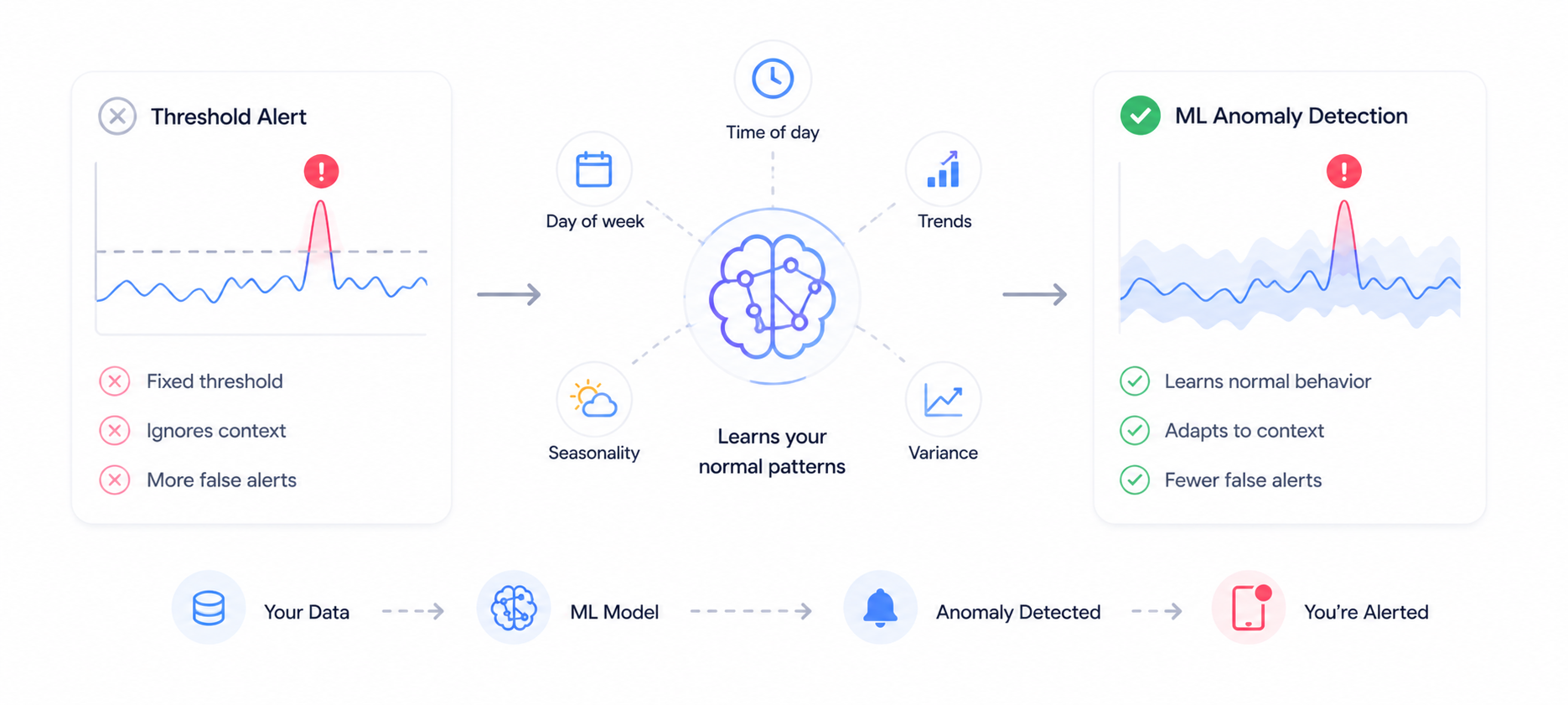
ML anomaly detection watches your business metrics and alerts you when something is genuinely abnormal — without you having to define what 'normal' looks like. Here's how it works, why it matters, and how it's different from threshold alerts.