Six monitoring tools compared on the one thing that matters most: do they actually detect silent failures? Heartbeat gaps, broken flows, zero-record cron jobs, AI agent loops — here's what each tool catches and what each misses.
PagerDuty and Incident.io both published comparison posts about each other in 2026. Neither mentioned what small teams and founders actually care about: catching the failures that never create an incident in the first place.
Most comparisons get this wrong from the first sentence. PagerDuty and Incident.io are incident response tools. NotiLens is a business pulse monitor. That distinction matters more than any feature table.
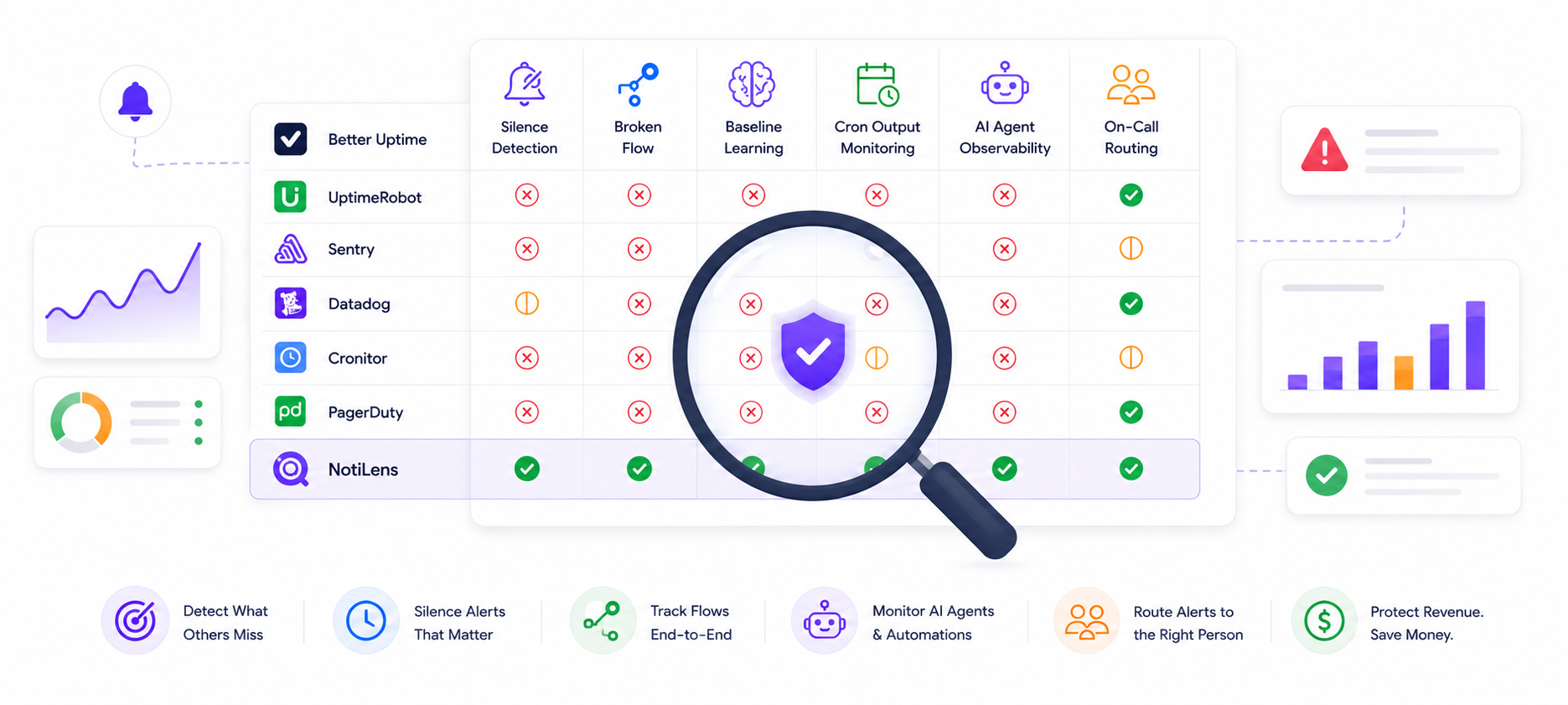
Not all monitoring tools detect silent failures. Here's how uptime monitors, error trackers, APM tools, and business pulse monitoring compare — and what each one actually catches.
PagerDuty starts at $21/user/month and was designed for 50-person SRE teams. If you're a founder or small team who just needs reliable alerting and on-call without the enterprise overhead — here are 7 better options.
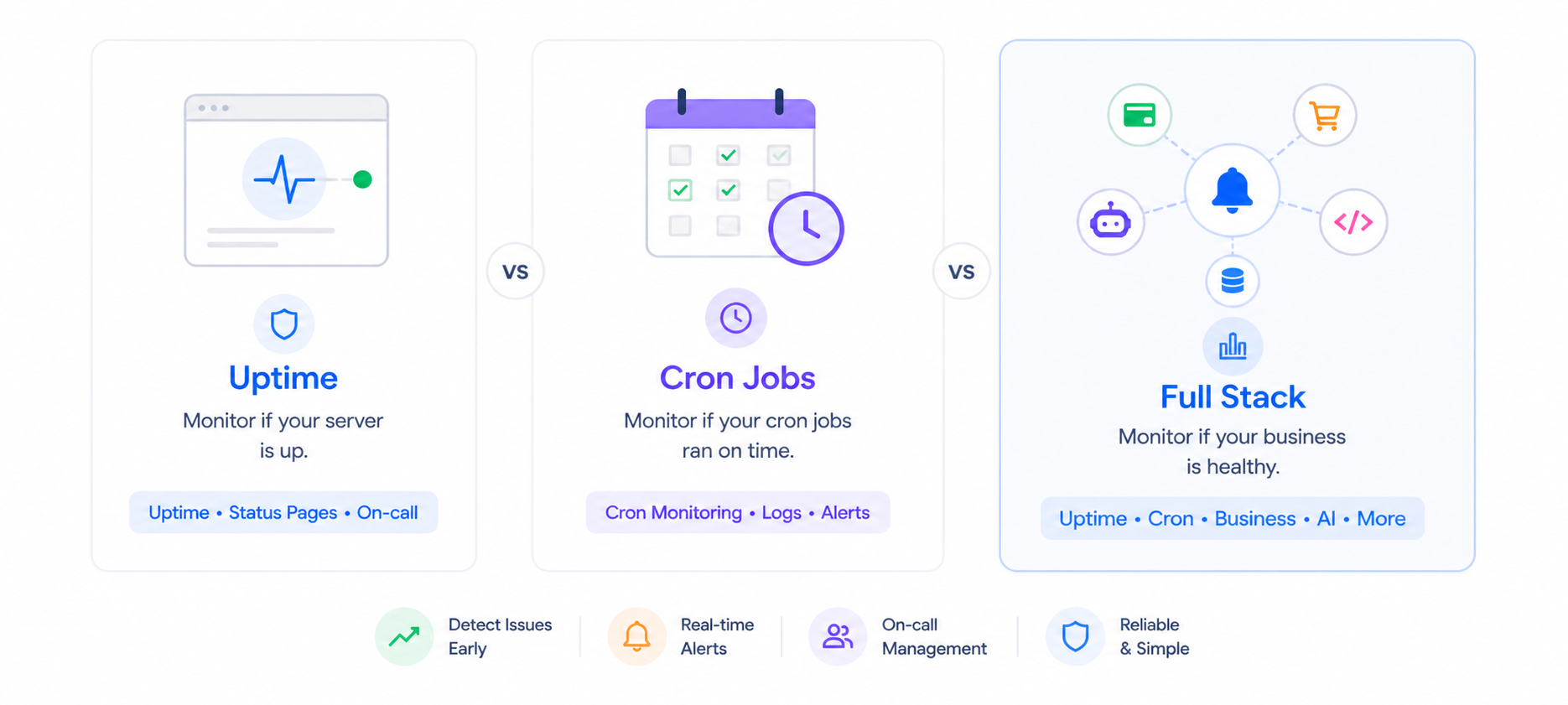
Better Uptime monitors if your server is up. Cronitor monitors if your cron jobs ran. NotiLens monitors whether your business is healthy — payments, orders, agents, jobs, and servers, all in one place with ML-powered silence detection.
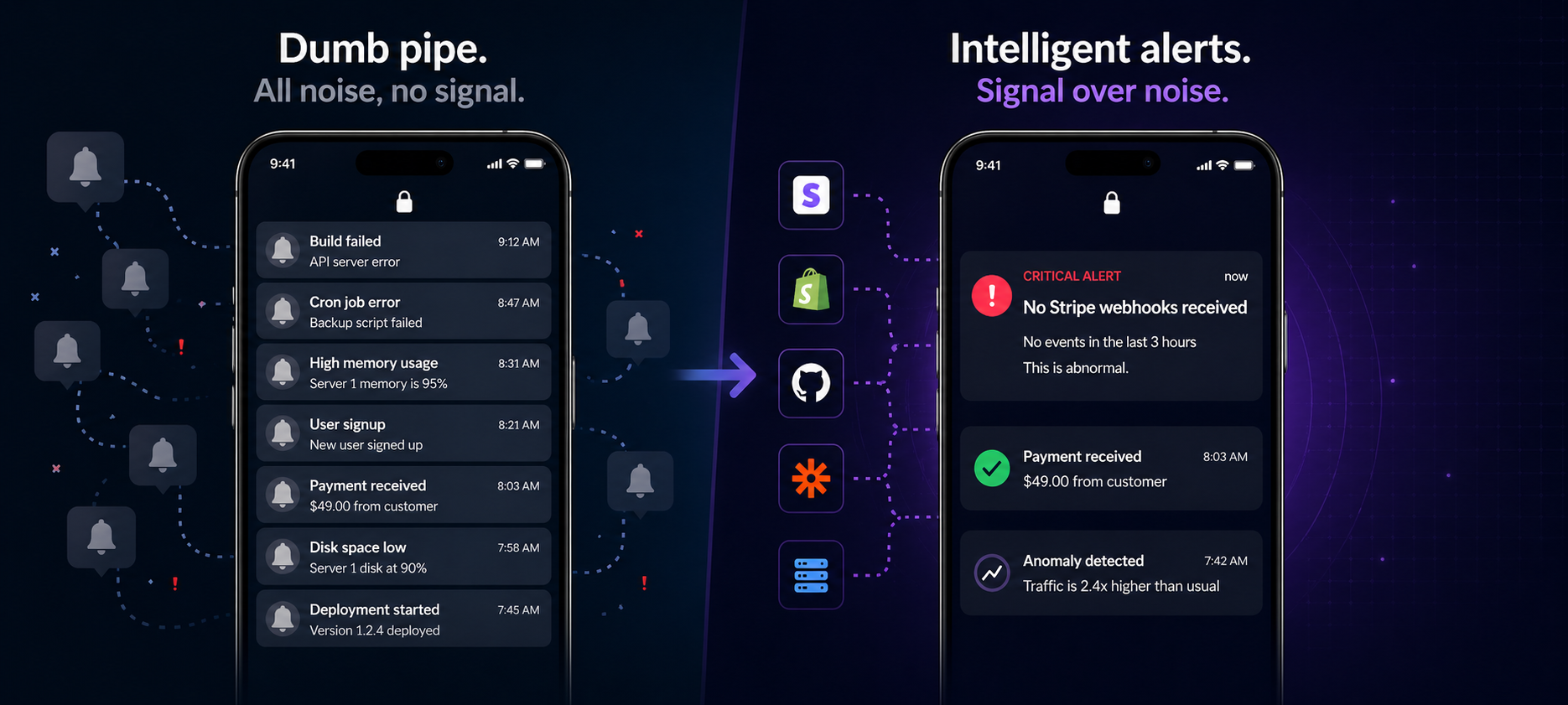
Pushover is a great dumb pipe for push notifications. But when your business needs intelligent alerting — silence detection, on-call scheduling, and ML-powered anomaly detection — it hits a wall fast.
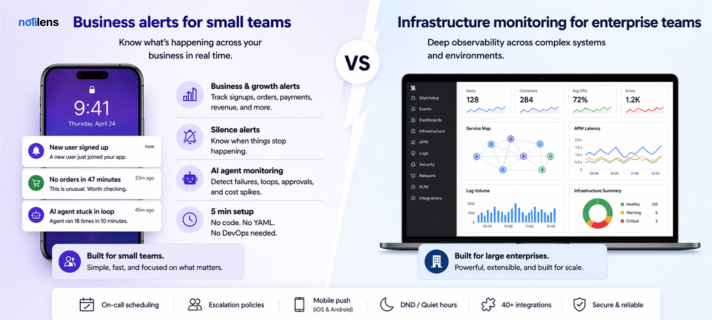
Datadog is a powerful infrastructure observability platform — but it costs $100+/month before you've monitored a single Stripe payment. Here's how NotiLens compares for founders and small teams.
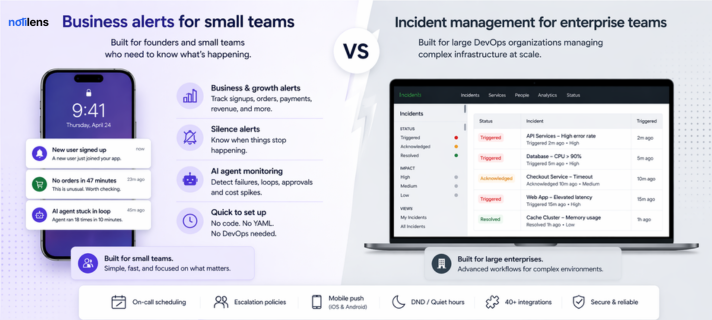
PagerDuty is built for enterprise DevOps. NotiLens is built for founders and small teams who need business-level alerts without a 6-week onboarding. Here's how they compare.