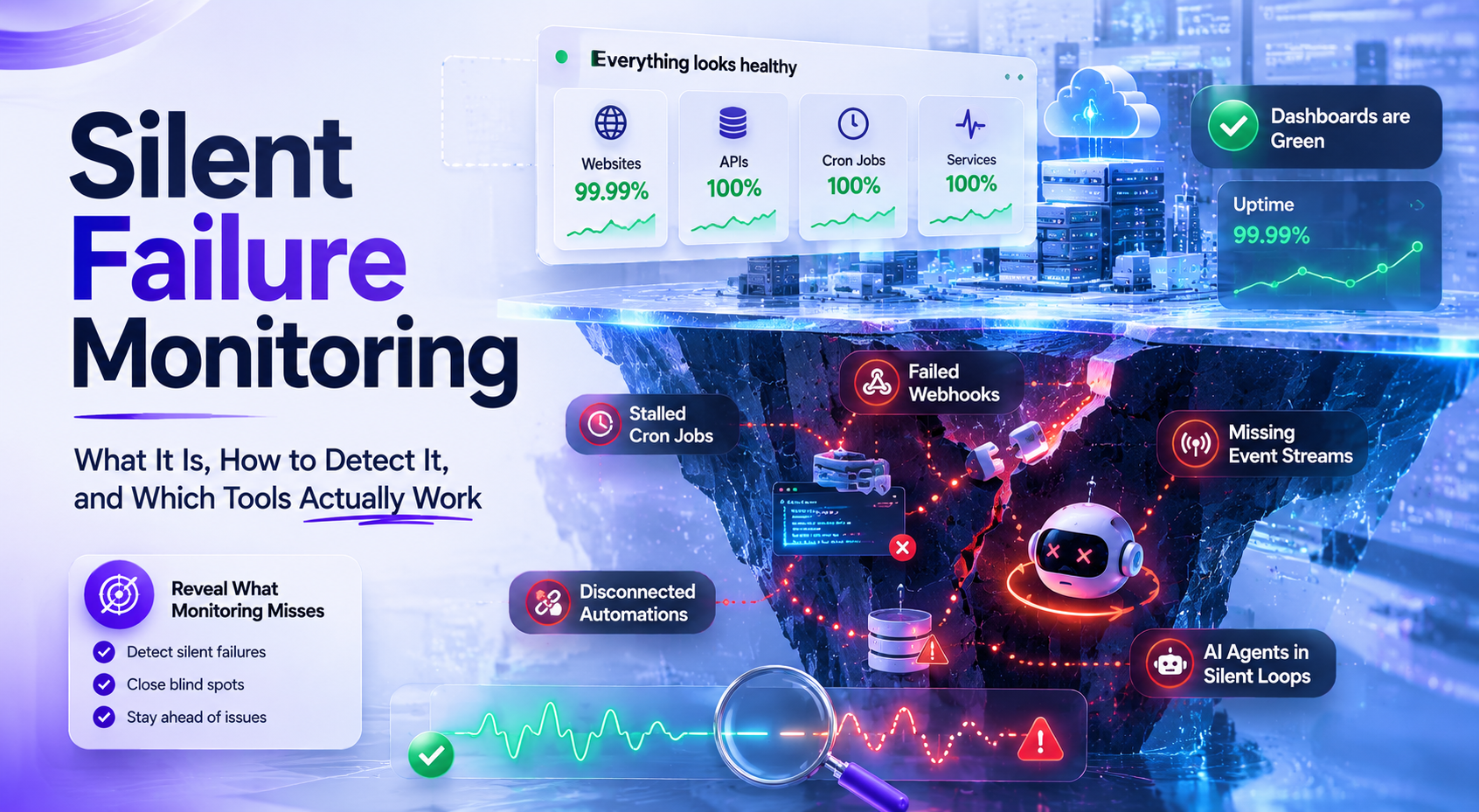
Silent failures don't throw exceptions. They don't create incidents. They just quietly cost you money until someone notices. This is the complete guide to understanding, detecting, and monitoring every type of silent failure in production.
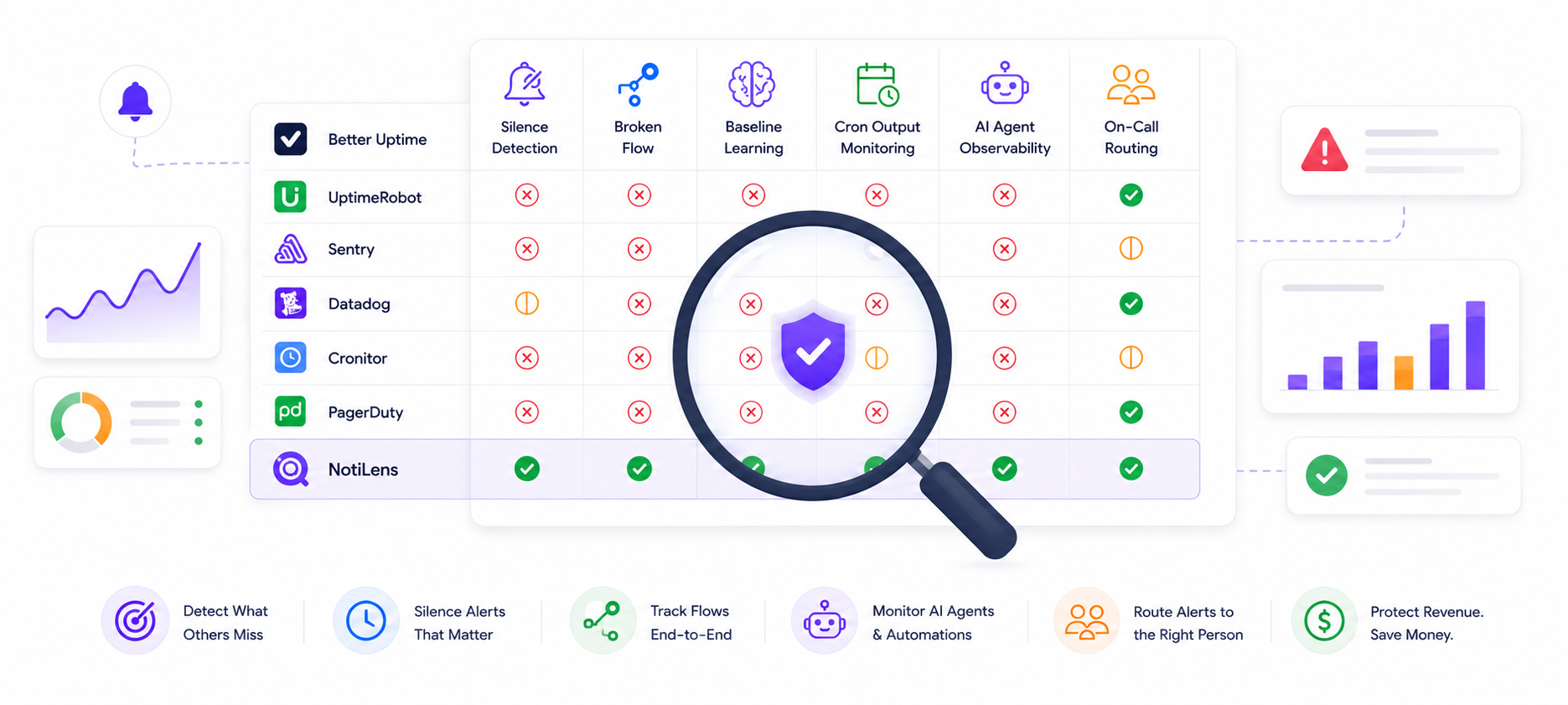
Six monitoring tools compared on the one thing that matters most: do they actually detect silent failures? Heartbeat gaps, broken flows, zero-record cron jobs, AI agent loops — here's what each tool catches and what each misses.
Most comparisons get this wrong from the first sentence. PagerDuty and Incident.io are incident response tools. NotiLens is a business pulse monitor. That distinction matters more than any feature table.
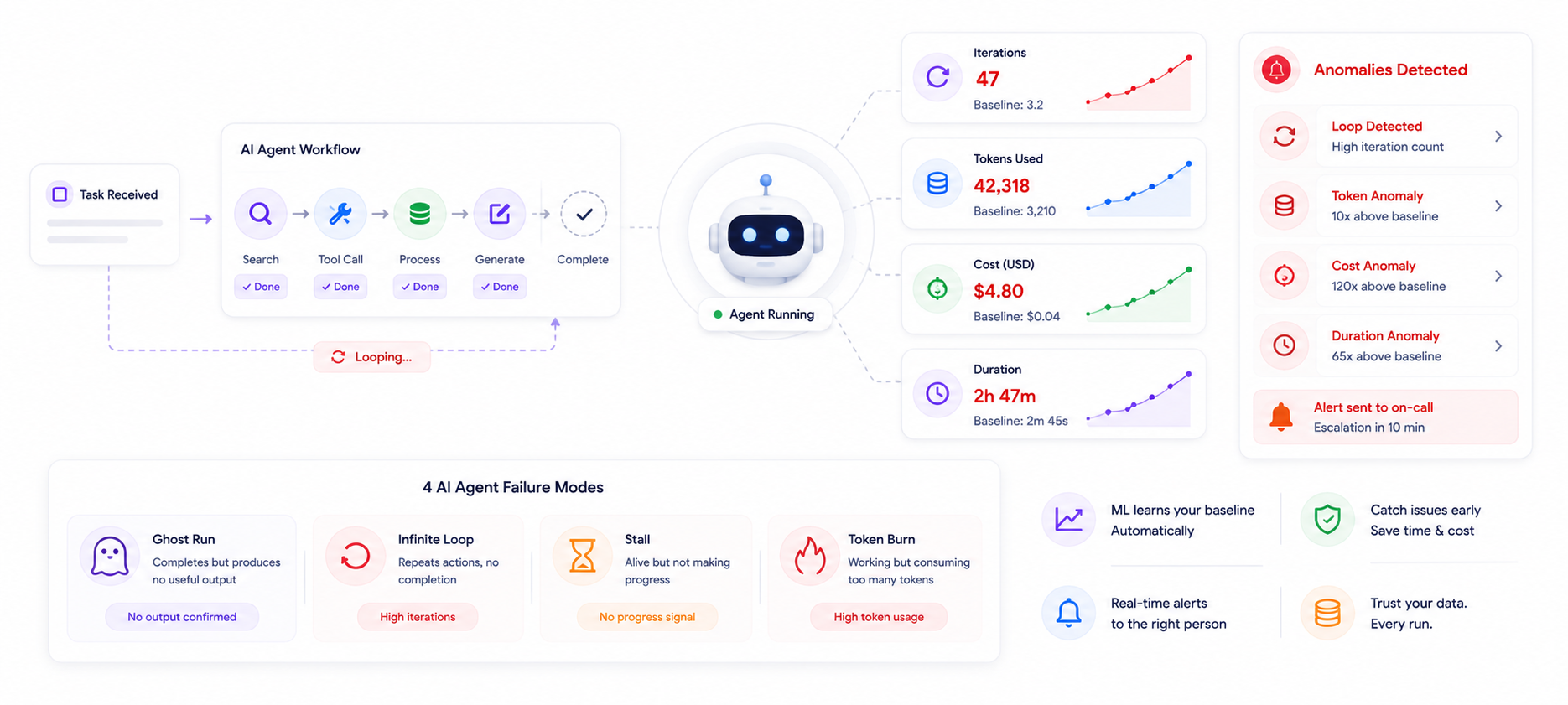
There are two questions you can ask about an AI agent running in production. Is it running? And is it working? Most monitoring stacks answer the first well. None of them answer the second.
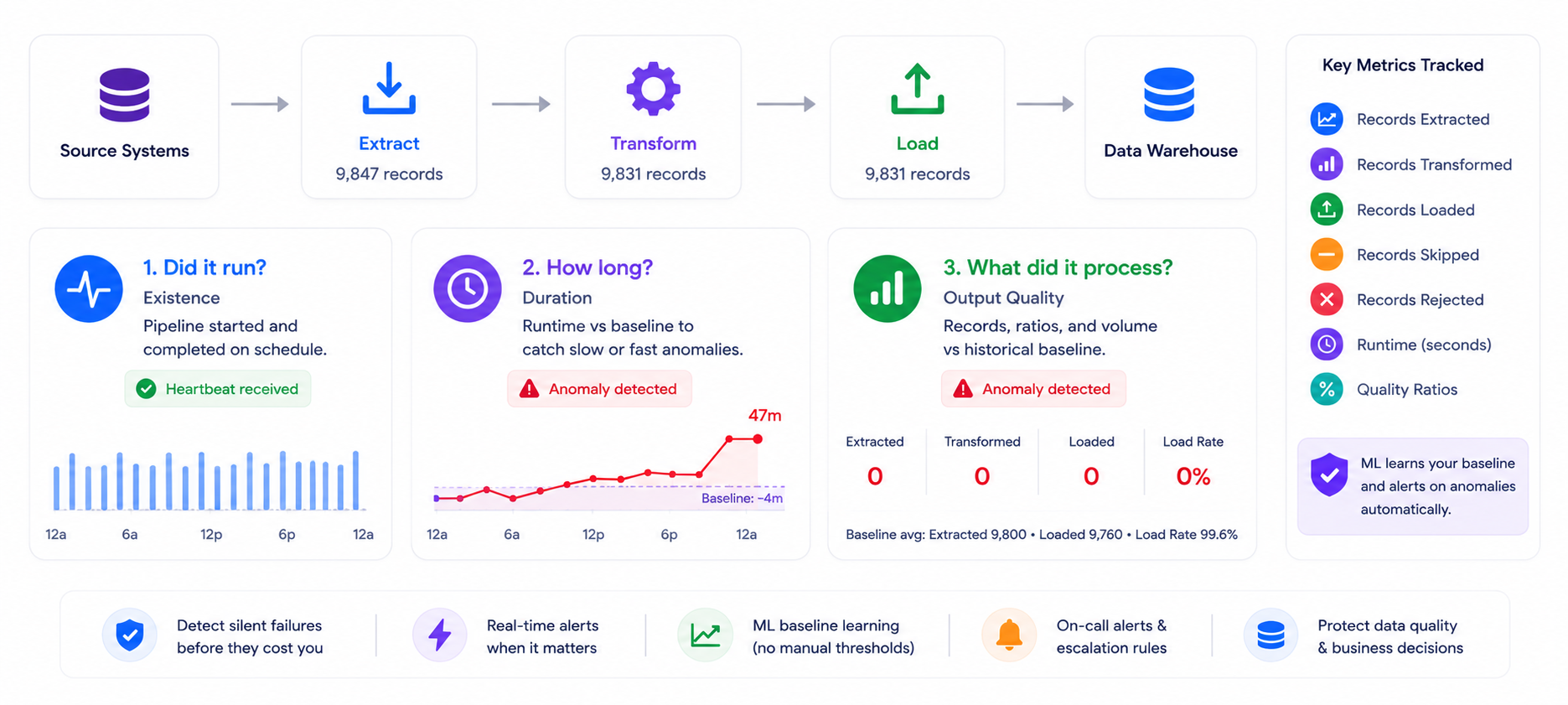
ETL pipelines fail silently more than any other part of a data stack. The job runs. The exit code is 0. Zero records were processed. Your data warehouse is stale and nobody knows. Here's how to catch it.
Not all monitoring tools detect silent failures. Here's how uptime monitors, error trackers, APM tools, and business pulse monitoring compare — and what each one actually catches.
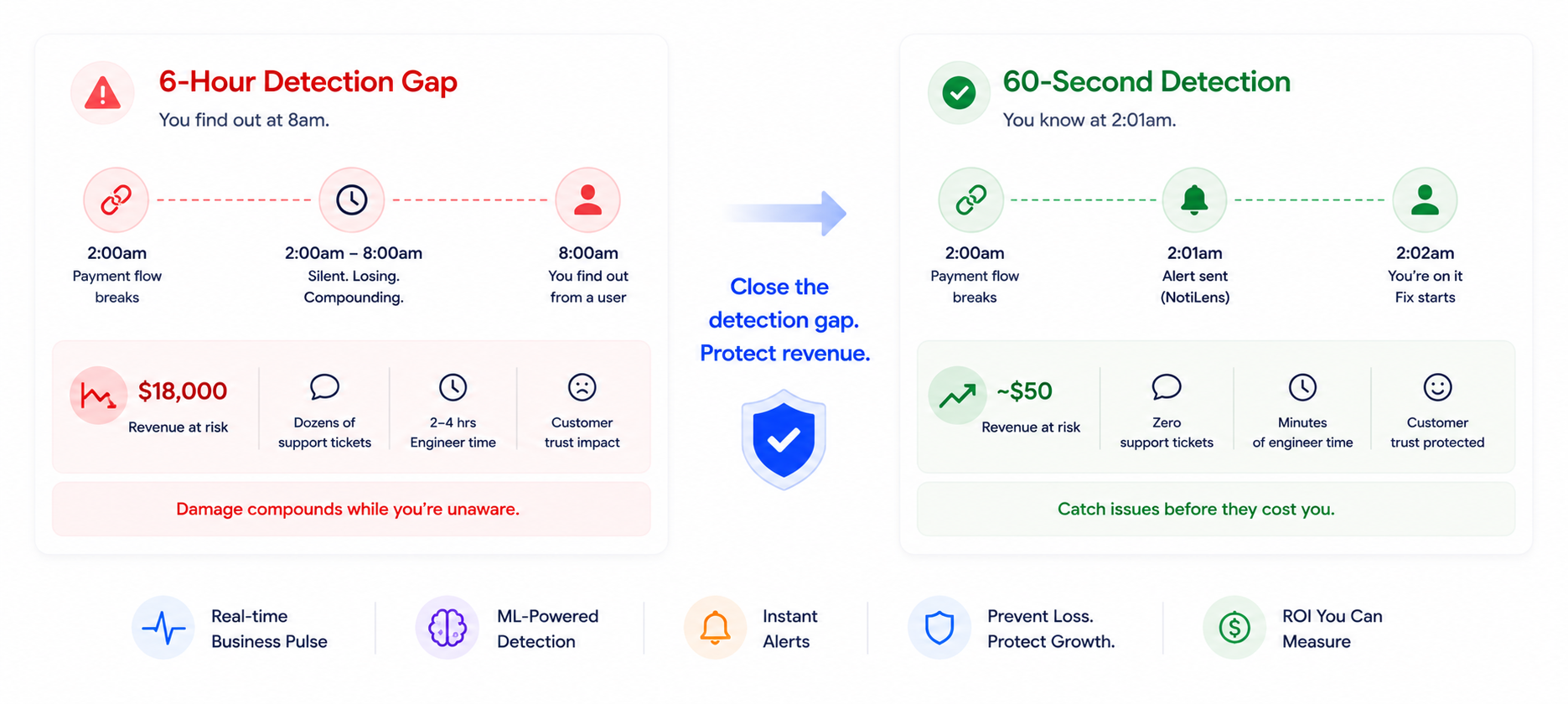
The detection gap is where silent failures compound — and most monitoring stacks have no answer for it. Here's the calculation nobody runs, and why detection time matters more than fix time.
AI agents fail differently from regular software. They don't crash — they drift, loop, stall, and consume resources while producing nothing. This guide covers the two failure modes unique to agentic AI and how to monitor for both.
Your uptime monitor is green. Your error rate is clean. Your server is responding. And your business has been quietly bleeding for six hours. This is the silent failure problem — and it's more common than anyone admits.